Mine Action Weekly, 6 - 12 July 2026
This week’s Mine Action Weekly explores global efforts to address explosive threats — from Afghanistan’s Soviet-era mine clearance and Laos’ enduring cluster munition legacy to Ukraine’s expanding demining response and new innovations in autonomous clearance technology. The newsletter also cover major funding commitments, regional cooperation, victim assistance, and policy developments shaping the future of humanitarian mine action.

Disclaimers:
This newsletter features news reports and articles from a variety of sources. Mention of these resources does not indicate agreement with or endorsement of the opinions of others. I do not claim responsibility or credit for these works, and do not vouch for the information contained in them.
This newsletter is created and managed in a personal capacity, independent of my professional affiliation with Fondation suisse de déminage (FSD).
🗞️ Weekly News Roundup
The weekly news roundup showcases a low-down of the top mine action news and insights from the past seven days.
1. EO Contamination, Clearance & Land Release
Provincial governor spokesman Saifuddin Laton confirmed that the initiative targets the detection, neutralisation, and removal of landmines and unexploded ordnance (UXO) left over from the former Soviet invasion. Designated contaminated zones are scheduled for thorough, systematic clearance.
During mine-clearing operations in the liberated territories, a total of 23 anti-personnel mines, 21 anti-tank mines, and 259 unexploded ordnances (UXOs) were detected and neutralized from June 29 to July 5, the Azerbaijan Mine Action Agency (ANAMA) said in a statement. The agency noted that a total of 2,333.3 hectares of territory had been cleared of mines and UXOs during the reporting period.
🇮🇱 🌊 Israel: Project aims to clear beach of ordnance
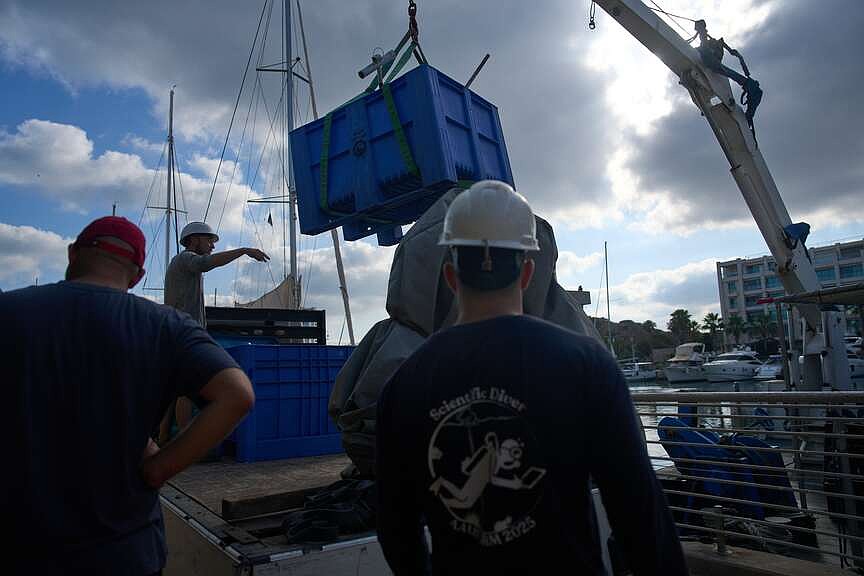
Israel's National Mine Action Authority (INMAA) and the National Institute of Oceanography, with funding from the Rishon LeZion Municipality, are conducting a research project to map and eventually clear unexploded ordnance from the seabed off Rishon LeZion. The initiative is studying how decades-old munitions move in underwater conditions to better target future clearance operations, with the goal of reopening sections of the coastline that have been closed for military use for nearly 80 years. The project also aims to reduce environmental contamination from corroding munitions and improve public safety as underwater explosive hazards receive increasing global attention.
🇱🇦 Laos: Weapons of long-ago conflicts still haunt people of Laos
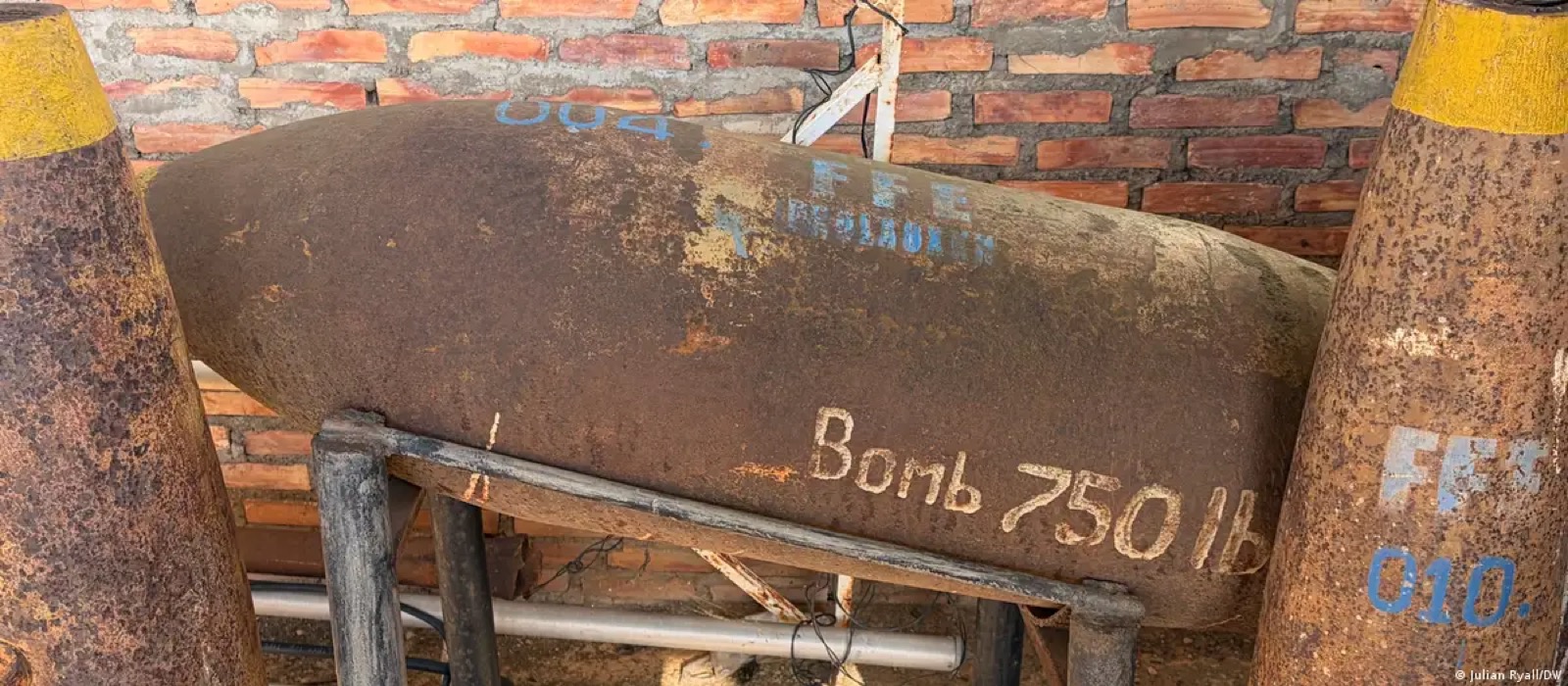
More than 50 years after the Indochina War, unexploded ordnance continues to threaten communities across Laos. UXO Lao clears contaminated land and delivers risk education, while COPE provides rehabilitation for survivors. The enduring legacy of cluster munitions highlights the need for sustained international support for humanitarian mine action.
🇱🇧 Lebanon: Peacekeepers continue efforts to reduce explosive threats in South Lebanon
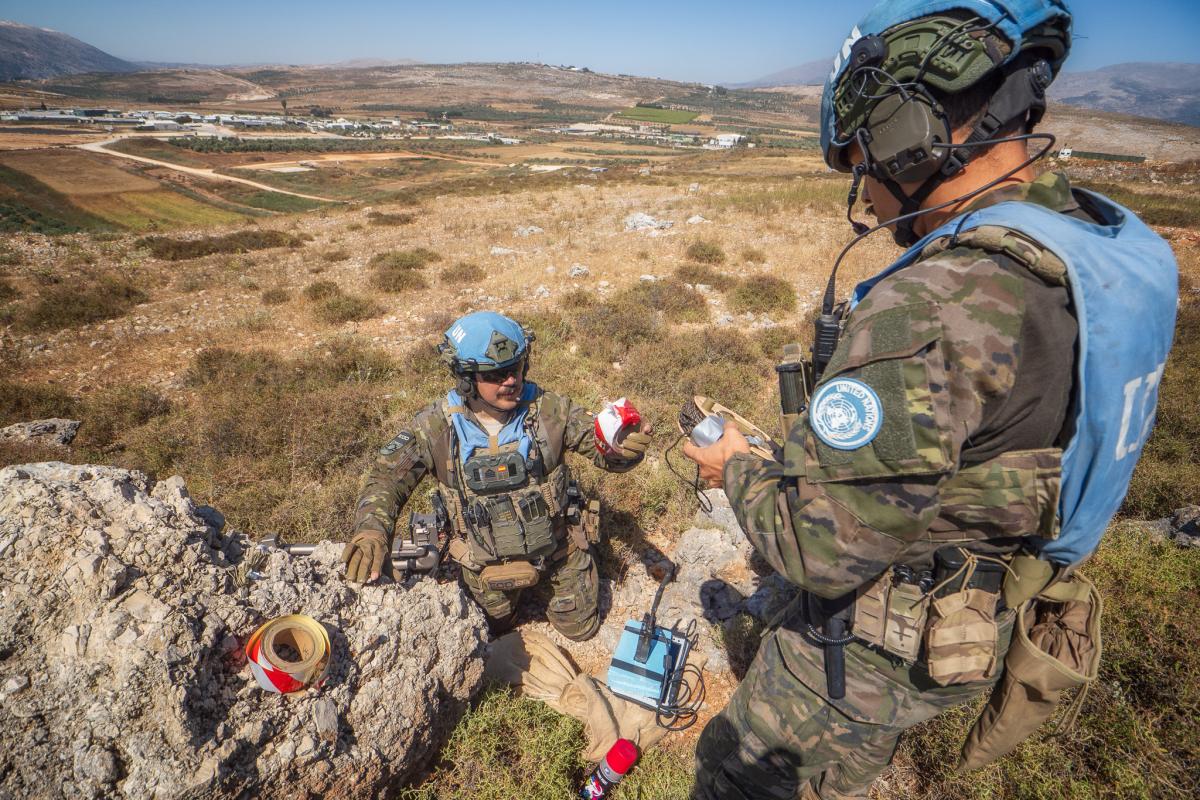
UNIFIL and the United Nations Mine Action Service (UNMAS) continue to work together to strengthen Explosive Ordnance Disposal (EOD) and demining capabilities in southern Lebanon. The partnership supports the implementation of UN Security Council Resolution 1701 by helping reduce the risks posed by explosive remnants of war and improving safety for local communities.
🇰🇷 South Korea: Joint Chiefs of Staff Urge Caution Over Washed-Away Landmines

South Korea's Joint Chiefs of Staff (JCS) warned the public to avoid suspected landmines that may have been washed south by heavy rainfall along the Demilitarized Zone (DMZ). Authorities urged residents not to touch suspicious objects and to report them immediately, highlighting the continuing risks posed by legacy minefields following severe weather.
Humanity & Inclusion (HI) highlights how poverty is driving Syrians into contaminated farmland and grazing areas despite the known risks of landmines and unexploded ordnance. Alongside physical rehabilitation and prosthetic support for survivors, HI delivers explosive ordnance risk education to communities, helping reduce casualties while advocating for expanded clearance of contaminated land.
Teams from the Donetsk-Luhansk Mobile Rapid Response Center of Ukraine's State Emergency Service (DSNS) are actively working to remove explosive remnants from previously occupied areas in the Kharkiv region. Every day, these specialists inspect agricultural fields, helping to protect local residents and restore normal community life in the area.
🇾🇪 Yemen: MASAM clears nearly 11,000 mines and explosive remnants in Yemen’s Midi district
The director-general of the Saudi-backed Project Masam for Landmine Clearance in Yemen praised teams for removing nearly 11,000 land mines and war remnants at a meeting on Wednesday.
Following the NATO summit in Ankara, Romania, Bulgaria, and Turkey agreed to broaden the mandate of the joint Black Sea mine-clearing operation, including the protection of critical infrastructure in its tasks.
🌊 European Naval Coalition for Hormuz Disappears Without a Trace

Without formal notice, the European-led naval force - which was intended to safeguard the Strait of Hormuz once it was safe to do so - appears to have foundered without any formal announcement of its demise. Up to 40 nations had expressed an interest in supporting the plan.
2. Explosive Ordnance Risk Education (EORE)
🇺🇦 🇯🇵 Ukraine: Notice the Changes: Third wave of mine safety information campaign launches in Ukraine
A new wave of the national mine safety information campaign, titled “Notice the Changes,” has been launched in Ukraine with the aim of helping people to recognise new explosive ordnance threats and act safely when they encounter suspicious objects. The campaign is part of a United Nations Development Programme (UNDP) in Ukraine project funded by the Government of Japan. It is being implemented by BBC Media Action, with technical support from the State Emergency Service of Ukraine (SESU).
3. Accidents, Survivors, Victim Assistance
🇺🇦 Ukraine: Conflict-related trauma and operational safety in Ukraine’s mine action response
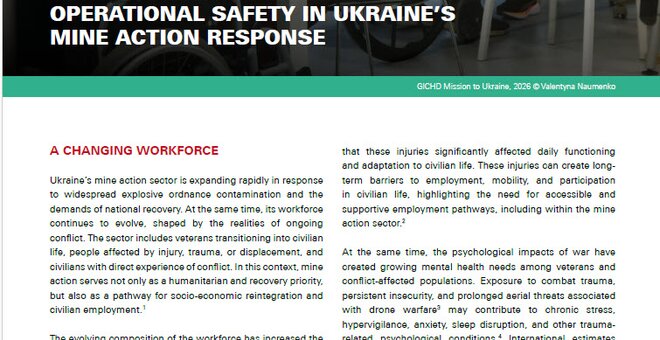
Ukraine’s mine action sector is expanding rapidly in response to widespread explosive ordnance contamination and the demands of national recovery. At the same time, its workforce continues to evolve, shaped by the realities of ongoing conflict. The sector includes veterans transitioning into civilian life, people affected by injury, trauma, or displacement, and civilians with direct experience of conflict. In this context, mine action serves not only as a humanitarian and recovery priority, but also as a pathway for socio-economic reintegration and civilian employment.
Other EO Accidents from Around the Globe:
🇦🇿 Azerbaijan: Landmine Explosion in Azerbaijan's Kalbajar Injures Livestock Near Lachin
🇰🇭 Cambodia probes recent border blast that injured soldiers
🇸🇾 Syrian Soldier Dies During Mine Clearance Mission In Aleppo
🇸🇾 Syria: Two people from Al-Sukhna die in landmine explosion in Homs
🇸🇾 Syria: Landmine explosion leaves child killed in Al-Suwaidaa
🇸🇾 Syria: Old ordnance | Young man injured in eastern Homs countryside
🇸🇾 Syria: Attempting to dismantle landmine | Explosive expert injured in Hama
4. Advocacy, Policy, Conventions, Strategies and Standards
The Croatian Parliament will conclude this week's session with a Report on the Implementation of the Mine Action Plan and the Financial Resources Spent for 2025, according to which more than two thousand mines were destroyed in Croatia last year.
🇯🇴 Jordan: Geneva Centres Open Middle East Hub to Deepen Regional Engagement

The Geneva Centre for Security Sector Governance (DCAF) and the Geneva International Centre for Humanitarian Demining (GICHD) have inaugurated a joint regional hub in Amman to serve the Middle East and North Africa (MENA), marking the first collaborative initiative of its kind between the two Geneva-based organisations.
🇱🇦 Lao PDR: Norwegian People's Aid Supports National Consultation Ahead of CCM Review Conference
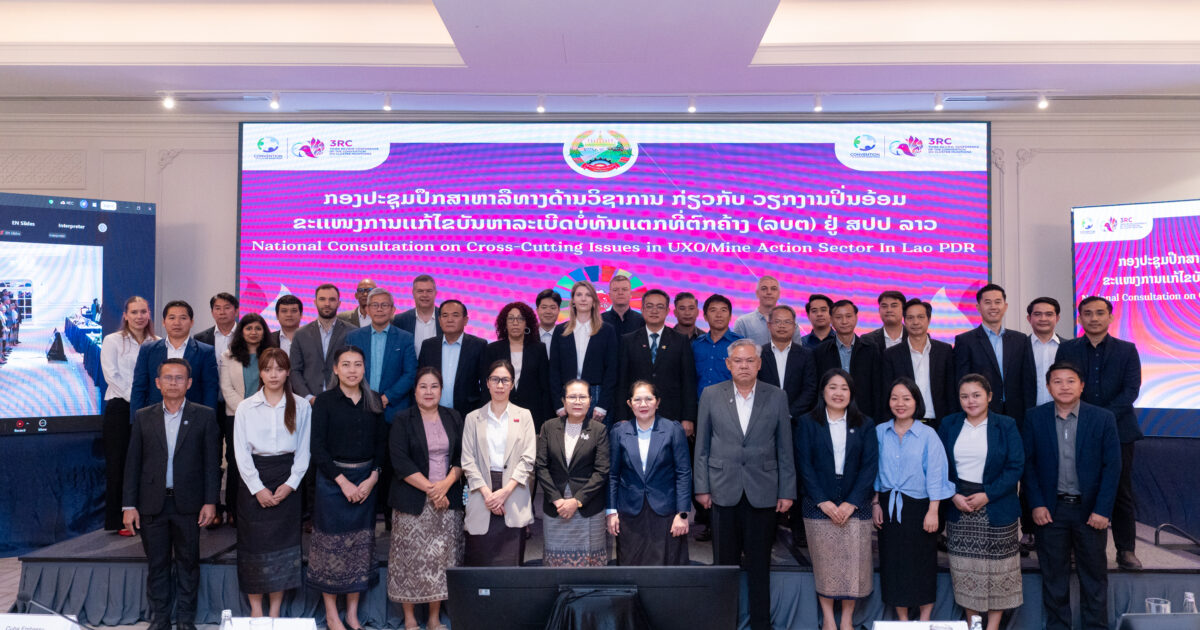
Norwegian People's Aid (NPA) participated in a national consultation organised by the National Regulatory Authority (NRA) to support Lao PDR's preparations for hosting the Third Review Conference of the Convention on Cluster Munitions in September 2026. NPA shared its Green Field Tool to promote environmentally responsible mine action and is providing technical assistance, with support from the Government of Canada, to help deliver the conference successfully.
5. Stockpile Destruction, Demolition, WAM and Disarmament
6. Research, Innovation, Technology and Market Trends
French defence firm Thales said Monday it plans to acquire a major stake in Exail Technologies, a manufacturer of mine clearance drones, and plans to launch a buyout offer to acquire the company. “With this acquisition, Thales aims to increase its scale in the underwater warfare market, and to expand its capabilities in inertial navigation systems through the addition of Exail’s complementary expertise,” it said in a statement.
🇺🇦 Ukraine: Environmental risks of humanitarian demining: evidence from a war-affected region (Ukraine)
Ukraine is currently the most heavily mined country in the world, with nearly 30% of its territory affected by landmines and unexploded ordnance, which is creating long-term constraints for agricultural recovery. Humanitarian demining restores access to land but may also introduce secondary contamination by releasing and redistributing potentially toxic elements. This study assessed the concentrations, spatial distributions, and ecological risks of chromium (Cr), nickel (Ni), cadmium, copper, manganese, cobalt (Co), barium and aluminium in agricultural soils from mined, manually demined, and detonation sites in southern Ukraine.
🇺🇦 Ukraine Turns US-Supplied M113 Armored Carrier Into Remote-Controlled Mine Clearance Robot
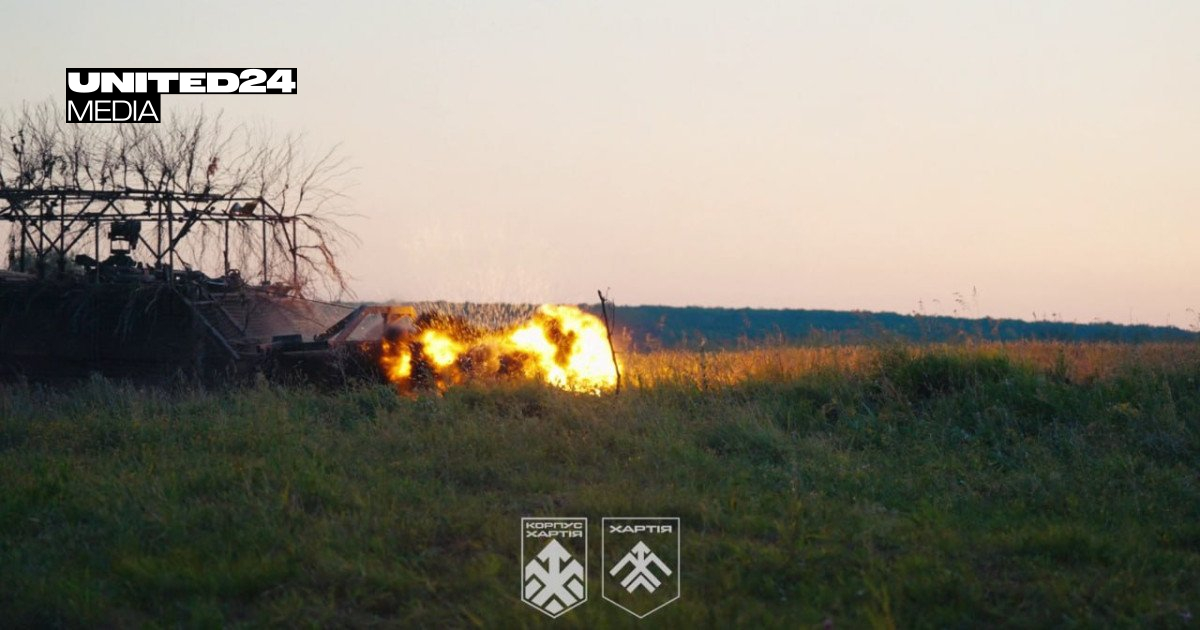
Ukraine’s National Guard has converted a US-supplied M113 armoured personnel carrier (APC) into a remotely operated mine clearance vehicle capable of clearing routes while also supporting frontline logistics, according to the 2nd Corps “Khartiia” on July 8.
🇬🇧 United Kingdom: Real-time UXO incident platform aims to improve site risk assessment
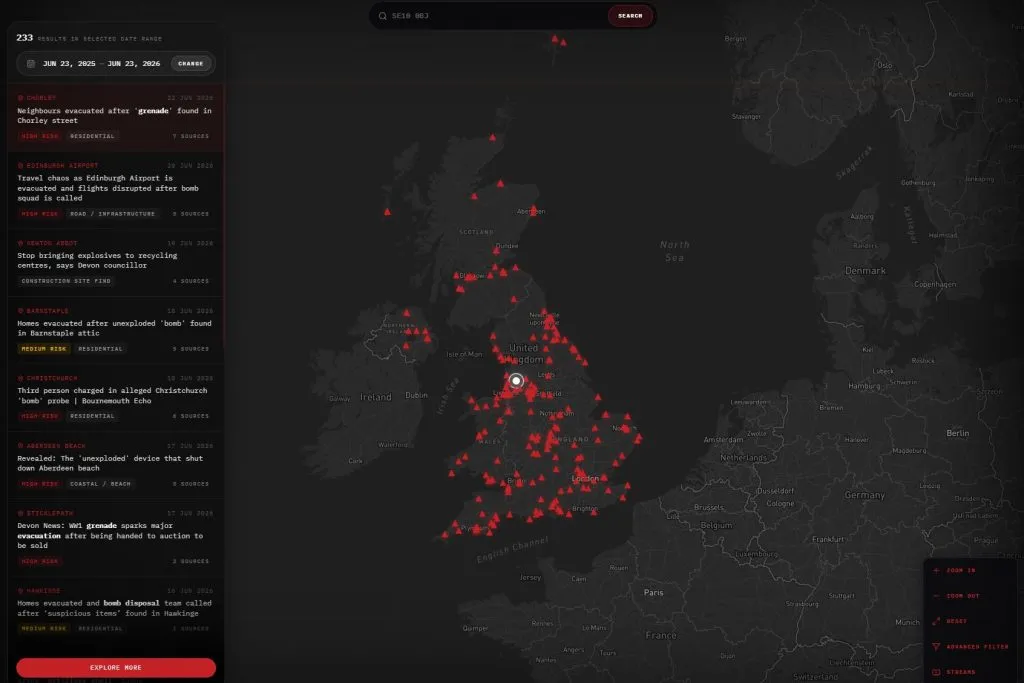
Brimstone has launched the Remnant intelligence platform, giving ground engineering professionals live access to verified UK unexploded ordnance (UXO) incidents to support risk assessment and mitigation planning.
🇬🇧 🌊 United Kingdom: New minehunting system to help Royal Navy destroy mines in Hormuz

A new minehunting and disposal system that has seen action in Ukraine will be part of the Royal Navy’s arsenal in the Strait of Hormuz. The leading-edge submersible remote-controlled-vehicle, battle-proven in Ukraine, is part of a range of minehunting and disposal systems, plus other autonomous equipment, loaded aboard RFA Lyme Bay in Gibraltar so she can serve as a mine warfare mothership. The ship sailed this week for a potential multi-national mission to the Strait of Hormuz.
🇺🇸 🌊 United States: San Diego company develops underwater robots for military mine-clearing missions
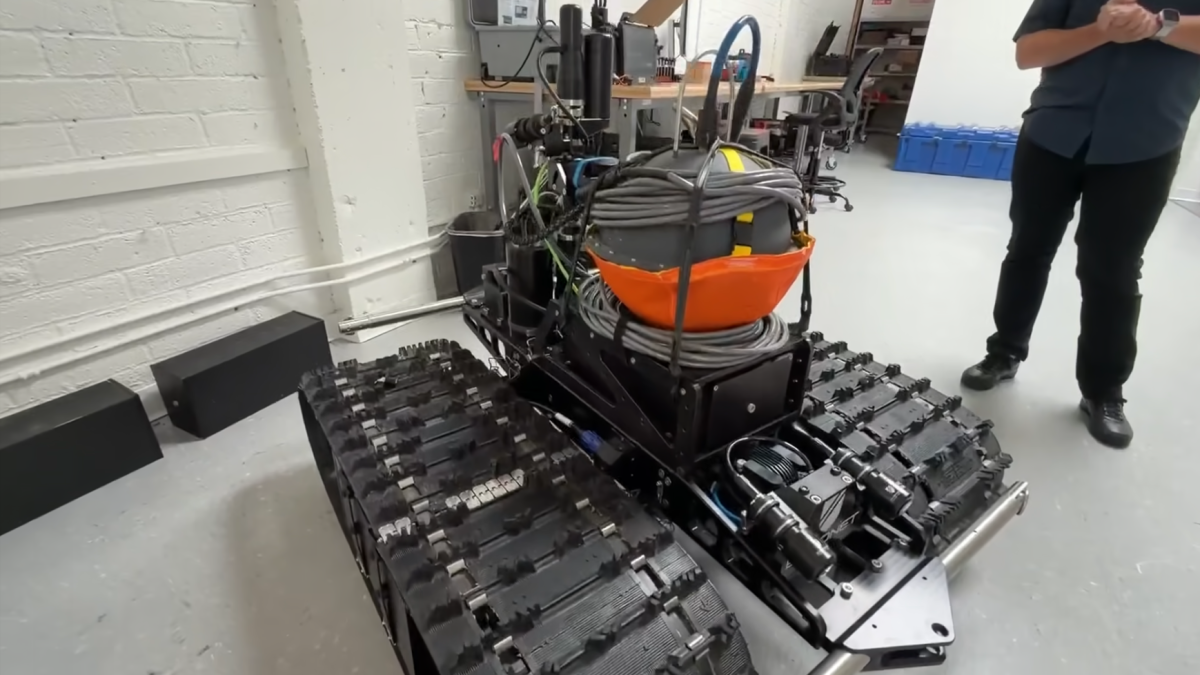
A San Diego defense technology company is developing underwater robots designed to help military personnel detect sea mines while reducing the dangers of explosive disposal missions. The technology comes as military operations continue in the Strait of Hormuz, where Iran and the United States are working toward a lasting peace agreement and mine-clearing operations have taken place.
🇺🇸 United States: Safe Pro Group Lands $1.3M Government Contract to Integrate AI Threat Detection into Unmanned Ground Vehicles

Safe Pro Group Inc. has secured a new $1.3 million U.S. Government subcontract to integrate its artificial intelligence-powered threat detection technology into autonomous unmanned ground vehicles (UGVs), the company announced.
7. Mine Action Assistance, Funding and Cooperation
The European Union has delivered the first of two advanced, remotely operated demining machines to Armenia's Humanitarian Demining and Expertise Center (CHDE), significantly strengthening the country's humanitarian mine action capacity. Funded through the European Commission's Service for Foreign Policy Instruments (FPI), the €5.5 million assistance package also includes operator training, technical expertise, safety equipment, ambulances, and operational support. The new equipment will accelerate the clearance of landmines and explosive remnants of war, improve safety for deminers, support border communities, and help prepare land for future infrastructure projects, including new border crossing points.
🇰🇭 🇨🇳 Cambodia: Demining chief lauds Chinese support, promotes shared future

Senior Minister Ly Thuch, first vice-president of the Cambodian Mine Action and Victim Assistance Authority (CMAA), has hailed China’s support for Cambodia’s development, saying its assistance — particularly in humanitarian mine action — has transformed war-affected land into safe, productive areas while strengthening peace, development and the Cambodia-China community with a shared future.
Cambodia Mine Action Centre and the Japan International Cooperation Agency have concluded a senior leadership training programme for mine action officials from Ethiopia, Nigeria, Somalia and South Sudan, highlighting Cambodia’s transformation from a mine-affected nation into a provider of expertise and technical assistance to the international community.
When asked whether European countries might offer Iran financial incentives to secure Tehran’s consent for a mine-clearing mission, Germany’s foreign minister Johann Wadephul clarified that “We do not need to offer Tehran anything at all; quite the contrary: Iran has unlawfully mined an international shipping lane. If we clear it together with other European partners, we do not intend to charge a fee for doing so at this stage,” he added. “In principle, however, it would be justified, and Iran ought to foot the bill, since we would be remedying damage caused by the regime.”
🇰🇭 🇯🇵 🇺🇦 Japan, Cambodia share demining know-how to world as landmines remain threat

With landmines remaining a threat around the world, Japan and Cambodia, which have a decades-old partnership on demining operations, have been expanding their efforts to share their expertise with other countries, including Ukraine. With Japan's support, the Cambodian Mine Action Centre has been providing training to Ukrainian officials since January 2023 in areas such as the operation and maintenance of landmine detectors and mechanical demining equipment.
UNDP in Ukraine with funding from the Government of the Republic of Korea has handed over two heavy-duty transport vehicles to the State Emergency Service of Ukraine (SESU) Main Department in Kharkiv Oblast to support the transportation and deployment of mechanical demining equipment. The handover was carried out as part of the global REVIVE initiative, implemented with funding from the Government of the Republic of Korea.
🇺🇦 🇩🇰 Ukraine: Dropla, a Danish-Ukrainian manufacturer of UGV and mine detection systems, has secured investment

The MITS Capital Group has invested in the Danish-Ukrainian defence company Dropla Tech. This was reported on the investment fund's website. MITS Capital has not disclosed the value of the deal or the company's valuation. Defence company Dropla Tech has joined the MITS acceleration programme, which, according to the fund, focuses on scaling operations. In particular, the investment involves working towards entering the NATO market and gaining access to expertise.
The Norwegian Government is strengthening its long-term efforts for humanitarian mine clearance in Ukraine. Through Norad, Norway is allocating up to NOK 400 million over four years to three organisations that will help protect civilians and reduce the risks posed by landmines, cluster munitions and other explosive hazards.
8. Other News
🎥 Video
Dhea is breaking new ground in Yemen and says she was inspired by seeing the women who work for HALO in Syria. She is making her country safer, one bomb at a time. Her work is supported by the Government of the Netherlands.
📅 Upcoming Events, Courses & Trainings
There are a number of interesting events for the mine action sector in the coming months, and some of the deadlines are approaching quickly.
There are a number of interesting events for the mine action sector in the coming months, and some of the deadlines are approaching quickly.
Join the public PhD defence of Henrique Garbino on 4 September 2026, from 13:00–17:00, at Sverigesalen, Swedish Defence University, Stockholm. Henrique will defend his dissertation, Unearthing Restraint: The Use and Non-Use of Landmines by Armed Groups, which examines why armed groups sometimes choose to limit violence. Drawing on research from Colombia and the Philippines, the thesis offers new insights into the dynamics of restraint in armed conflict and the factors that shape landmine use and non-use. The event is open to the public. Learn more here.
Organised under the Mine Action Innovation Hub, the Innovation Session 2026: Mine Action in Urban Areas is a three-day, in-person event bringing together mine action practitioners, national authorities, debris management and recovery actors, urban planners, researchers, technology providers, and donors. Applications to participate in the Innovation Session are now open until 17 July 2026.
Felix Connect is a dedicated networking event designed to bring together supporters, partners, and friends of Felix Fund - the bomb disposal charity. It’s a relaxed, welcoming space to connect, network, or simply catch up with familiar faces from across the EOD, Search, defence, and charity communities. The event will be held on 28 September in London. Learn more here.
The Mine Action: Innovation, Sustainability, and Global Partnerships speaker series is structured to address landmine and explosive remnants of war (ERW) challenges through a strictly humanitarian, civilian-protection-oriented framework, with clearly defined ethical, legal, and operational boundaries between humanitarian and military applications of technology. Dates are: FEB 19 | MAR 19 | APR 16 | MAY 21 | JUN 18 | JUL 16 | AUG 20 | SEP 17 | OCT 15 | NOV 19 | DEC 17. Time: 12:00 PM - 1:00 PM ET. Location: Virtual (Zoom Webinar). Register here.
The Geneva International Centre for Humanitarian Demining (GICHD)'s final IMSMA Global training course for 2026 is open for registration: 02 Nov 2026 - 06 Nov 2026 (Application deadline: 2 August 2026).
🔔 Always Stay in the Know – Never Miss an Update
This newsletter is subscribed to by over 3600+ dedicated readers on LinkedIn. To join this community of mine action professionals and supporters, go ahead and subscribe to the Mine Action Weekly newsletter. You can find all editions up to February 2026 on LinkedIn, and from March 2026 onwards here on Mine Action News.
Please reach out to me if there are any mine action news, journal articles, events, or updates that you would like to suggest for the next edition of Mine Action Weekly. You can find (and follow / connect with) me here. See you next Monday!


