Mine Action Weekly, 29 June - 5 July 2026

From developments in detecting plastic landmines and Lebanon's landmark decision to ban anti-personnel mines, to new donor support, innovative environmental initiatives, and the long-lasting legacy of explosive remnants of war, this week's edition of the Mine Action Weekly newsletter brings together the developments shaping humanitarian mine action. The newsletter also highlight inspiring stories from Laos and Syria, where clearance is restoring farmland, livelihoods, and hope for communities rebuilding after conflict.

Disclaimers:
This newsletter features news reports and articles from a variety of sources. Mention of these resources does not indicate agreement with or endorsement of the opinions of others. I do not claim responsibility or credit for these works, and do not vouch for the information contained in them.
This newsletter is created and managed in a personal capacity, independent of my professional affiliation with Fondation suisse de déminage (FSD).
🗞️ Weekly News Roundup
The weekly news roundup showcases a low-down of the top mine action news and insights from the past seven days.
1. EO Contamination, Clearance & Land Release
The Afghanistan National Disaster Management Authority announced late Monday the signing of a joint cooperation agreement with a leading mine clearance organisation aimed at tackling the persistent threat of landmines and unexploded ordnance. Under the deal, the demining organisation will clear around 1.88 million square meters of heavily contaminated land across multiple districts in the eastern provinces of Nangarhar, Kunar, and Nuristan, according to a statement issued by the authority.
The Azerbaijan National Agency for Mine Action (ANAMA) reported that 37 anti-tank mines, 36 anti-personnel mines, and 329 pieces of unexploded ordnance were detected and neutralised. Also, 1,696.11 hectares of land were cleared of mines.
France and Oman have agreed to work jointly with partners to clear mines in the Strait of Hormuz to secure maritime routes, French President Emmanuel Macron said on Monday. "We have decided to work jointly, together with our partners, on mine clearance in the strait to secure maritime routes and guarantee free and unconditional passage through the Strait of Hormuz," Macron said.
German Defence Minister Boris Pistorius said his party was considering withdrawing German naval vessels stationed in the Red Sea for mine clearance missions in the Strait of Hormuz. Pistorius said Iran had firmly rejected France's proposal to cooperate in clearing mines in the strategic waterway. He also did not see any realistic prospects for mine clearance operations to be carried out in the near future.
Iran said on Tuesday that there is no need for outside interference to clear mines in the Strait of Hormuz, claiming it “will only make the situation more complicated. Iran knows its responsibilities better than any other party and has the ability to fulfill them, and there is no need for the intervention of others,” Foreign Ministry spokesman Esmaeil Baqaei said.
Norwegian People's Aid (NPA) has introduced its Green Field Tool (GFT) to help integrate environmental protection into humanitarian mine action operations in Lao PDR. The tool enables teams to assess environmental sensitivities, evaluate the potential impacts of clearance activities, and identify mitigation measures before demolition work begins. Combined with staff training and field assessments using ArcGIS Survey123, the approach aims to reduce environmental harm while maintaining safe and effective clearance of cluster munition-contaminated land.
Norwegian People's Aid (NPA) cleared a contaminated cassava plantation in Phonthong Village, Champasak Province, destroying 112 BLU-3B cluster submunitions and three additional items of unexploded ordnance across 37,080 square metres of agricultural land. The operation removed a SUU-14 dispenser containing six tubes of submunitions, allowing local farmers to safely prepare their fields for the upcoming planting season. The clearance was supported by the Government of the United States through the U.S. Embassy in Vientiane.
In June, the engineers of the National Army carried out 14 demining missions in several districts of the country, neutralizing 21 explosive objects left from the Second World War. Since the beginning of the year, the engineers of the National Army have carried out 66 demining missions and neutralised 182 explosive objects.
The demining of Gaza and the disposal of unexploded mines and shells left in the Palestinian enclave after two years of Israeli military operations could take about 30 years, a representative of an international non-governmental organization operating under the UN auspices said.
🇸🇳 Senegal: Casamance: Official Resumption of Humanitarian Demining Operations in Madina Manjack
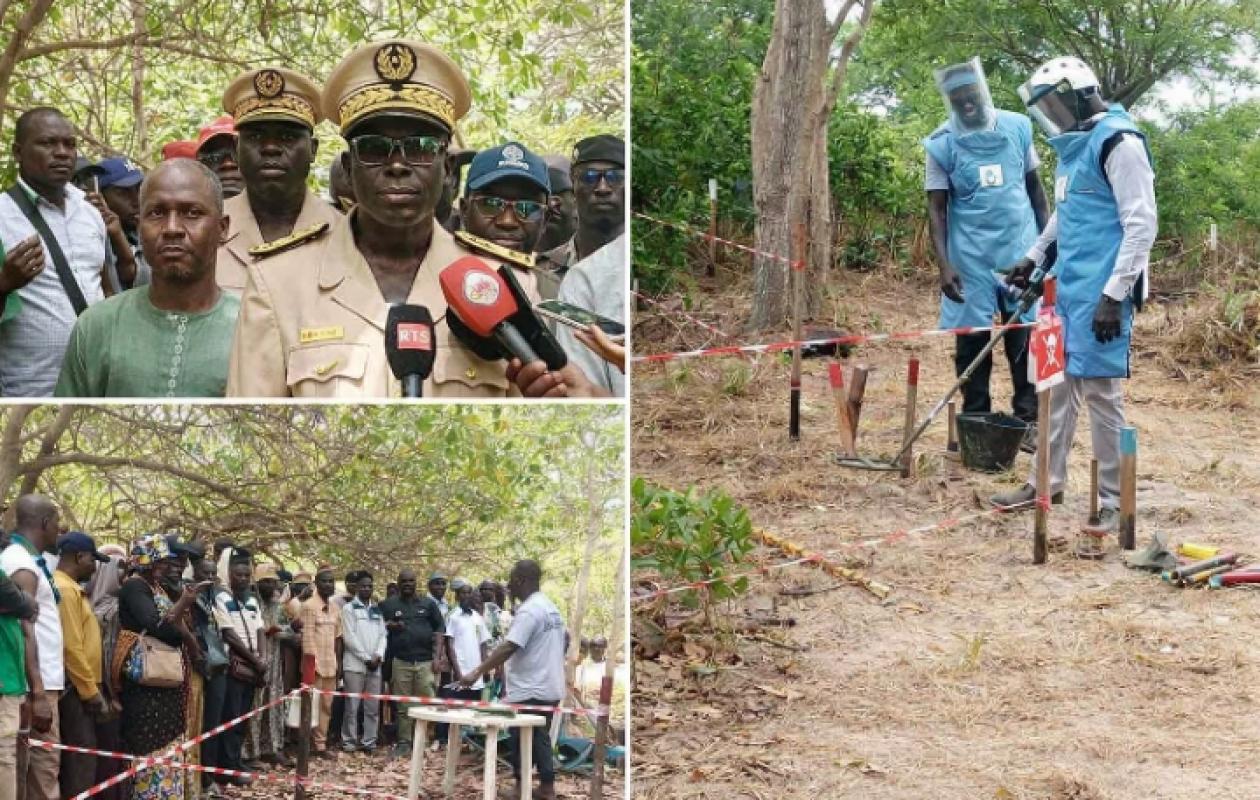
Humanitarian demining operations have officially resumed in Madina Manjack, Casamance, as Senegal renews efforts to meet its obligations under the Anti-Personnel Mine Ban Convention (Ottawa Convention). The National Mine Action Center of Senegal (CNAMS) announced that Humanity & Inclusion (HI) is currently the only accredited humanitarian mine action operator working in the field, with additional organisations undergoing accreditation. More than one million square metres of contaminated land remain to be cleared to support the safe return of displaced communities and the recovery of agricultural livelihoods.
🇸🇧 Solomon Islands: Surveying the Maruyama Trail
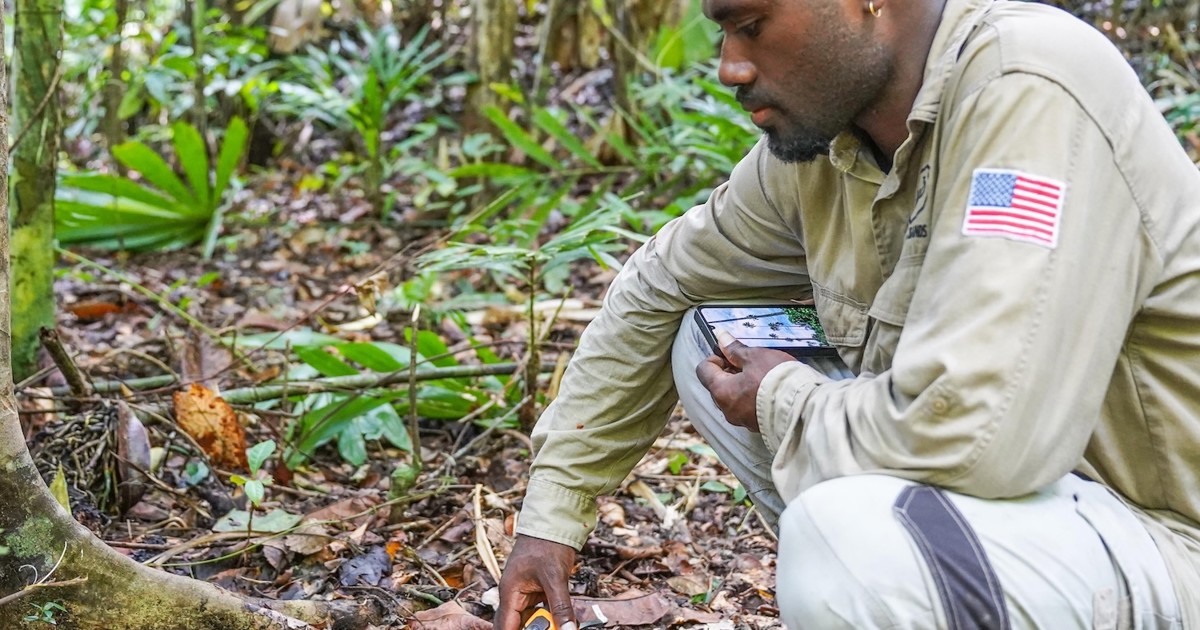
The HALO Trust is surveying the historic Maruyama Trail on Guadalcanal, where Japanese forces abandoned munitions during the Second World War. Combining historical military records, community knowledge, and non-technical survey, HALO aims to identify and map unexploded ordnance along the 80-year-old jungle route. The work will improve civilian safety while supporting future clearance operations and unlocking the trail's potential for tourism and local economic development.
Sudan is currently the world's largest humanitarian and displacement crisis, with 33.7 million people in humanitarian need – over 60% of the pre-war population. HALO started a Sudan program in 2025 in response to the extensive humanitarian crisis that has developed since the onset of a major conflict in 2023.
As violence and conflict surge, vulnerable communities in northern Togo face the added danger of explosive threats. Together with national authorities, UNOPS is helping to mitigate the risks and lay the foundations for peace and sustainable development.
Eighty years after the end of the Second World War, unexploded ordnance continues to threaten communities on Nanumea Atoll in Tuvalu, where thousands of kilograms of abandoned ammunition and explosives were dumped in and around the lagoon. Clearance operations are removing wartime hazards to improve public safety, protect the environment, and enable future development, highlighting the enduring legacy of conflict across the Pacific.
Demining divisions of the Ministry of Defense cleared 4,715 hectares of territory from mines and explosive devices in the first half of 2026. In particular, 1,914 explosive devices have been found and destroyed. The total number of such items since the start of Russia’s full-scale invasion stands at 482,330.
During a visit to the Odesa region on July 4, Ukrainian President Volodymyr Zelenskyy unveiled plans to create a Naval Academy and a new brigade focused on mine countermeasure vessels. Decree No. 583/2026 instructs the Cabinet of Ministers to establish the Naval Academy based on the Institute of Naval Forces of the National University 'Odesa Maritime Academy.' This move highlights Ukraine's commitment to strengthening its naval capabilities amid ongoing security challenges.
UN Resident Coordinator's Office Senior Mine Action Expert Paul Heslop and Paul Davies argue that Ukraine should adopt an outcome-led approach to mine action, prioritising human security, livelihoods, infrastructure, and economic recovery over traditional metrics such as hectares cleared or explosive hazards destroyed. Drawing on France's post-World War I Zone Rouge model, they propose a dynamic land classification system supported by evidence-based survey, AI, drones, robotics, and risk-informed land management, ensuring clearance efforts are aligned with recovery objectives rather than uniform technical outputs.
🇺🇦 🇺🇳 Ukraine: New training facility strengthens Ukraine's capacity for humanitarian underwater demining
As Ukraine works to clear thousands of square kilometres of contaminated waterways, a new training facility for underwater deminers has been opened. Built by the United Nations Development Programme (UNDP) in Ukraine with funding from the Government of France, the facility will strengthen the capacity of the State Emergency Service of Ukraine (SESU) to train specialists to detect and remove explosive hazards from rivers, lakes and coastal waters.
Two US Navy warships transited the Strait of Hormuz to begin clearing Iranian-laid mines, US Central Command said Saturday -- a claim Tehran denied as the Revolutionary Guards threatened to deal "severely" with military vessels crossing the strategic waterway. The announcement of the first such transit since the US-Israeli war with Iran began came shortly after President Donald Trump said Washington had started "clearing out" the strait, through which a fifth of the world's crude oil passes.
🇾🇪 🇪🇺 Yemen: Factsheet: DRCʼs Humanitarian Mine Action (HMA) Interventions in Yemen funded by the EU
Yemen’s civil war has resulted in massive explosive ordnance (EO) contamination. Today, Yemen is among the most heavily impacted countries in the world. In 2023, EO accounted for more than half of child casualties due to armed violence. The same year the European Union funded a 5 million EUR Humanitarian Mine Action response to the crisis, implemented by the Danish Refugee Council. Spanning three years, the project integrated key pillars of mine action – Explosive Ordnance Risk Education, Survey of Hazardous Areas, Victim Assistance, and Clearance – to deliver impactful and measurable benefits to vulnerable populations on Yemen’s West Coast. Learn more here.
In Taiz's Al-Shami village, landmine contamination severely disrupted daily life, preventing residents from moving safely, farming, or letting their children play outside. As families returned home following the West Coast conflict, the presence of mines became clear, but their true danger was only understood after explosions began striking vehicles and livestock, leaving the community in constant fear.
Teams from the Saudi-backed Masam Project for Landmine Clearance in Yemen, in cooperation with the Executive Mine Action Center’s branch in Mukalla, destroyed 724 landmines and explosive remnants of war during an operation last week. The destroyed items included 29 anti-personnel mines, one directional mine, 55 mortar shells, 88 artillery shells, 12 rocket-propelled grenade rounds, 18 hand grenades, 18 RPG propellant charges, 486 artillery shell fuzes, and 17 tank shell propellant charges.
Efforts to fully restore commercial shipping through the Strait of Hormuz continue to face a major obstacle after the International Maritime Organization (IMO) estimated that around 80 naval mines remain scattered across the waterway’s traditional shipping corridor.
Other EO Finds from Around the Globe:
🇧🇩 Bangladesh: Unexploded mortar shell recovered in Netrakona border
🇨🇦 Canadian Armed Forces to investigate possible unexploded munition in Labrador
🇮🇳 India: Unexploded Grenade Found At Railway Work Site On Assam-Nagaland Border
🇽🇰 Kosovo: A suspected unexploded device was found near the cemetery in Burince, Gjilan
🇱🇧 Lebanon: Army Removes Unexploded Ordnance and Defuses Air Bombs in Southern Towns
🇺🇦 Ukraine: Unexploded Russian aerial bomb removed by SES sappers from private yard in Kharkiv
🇬🇧 United Kingdom: Live unexploded bomb detonated off Essex coastline
🇬🇧 United Kingdom: Coastguard issues warning after 'high explosive material' found on Scots beach
2. Explosive Ordnance Risk Education (EORE)
Following political shifts in Syria in 2024/2025, refugees residing in Iraq consider returning home to Syria. However, the refugees face life-threatening dangers from widespread unexploded ordnance, especially in Northeast Syria. Current mine risk education efforts only reach individuals after they return, leaving those conducting exploratory visits, often male breadwinners, highly vulnerable.
This photo story documents the impact of humanitarian mine action interventions in Al-Shami village, Taiz Governorate. With the humanitarian funding from the European Union (EU), the Danish Refugee Council (DRC) has provided explosive ordnance risk education and landmine clearance, helping children like Yassen learn safer behaviors and better protect themselves from danger.
3. Accidents, Survivors, Victim Assistance
The United Nations Office for the Coordination of Humanitarian Affairs (OCHA) has announced that unexploded ordnance in Afghanistan continues to threaten the lives of civilians, with children accounting for the majority of the victims. The organisation reported on Wednesday, July 1, that between January and May, 175 casualties caused by unexploded ordnance were recorded, with approximately 75 percent of the victims being children.
Cambodia logged 28 landmine and explosive remnants of war (ERW) casualties in the first half of 2026, an increase of 16.6 percent compared to the 24 victims during the same period last year. "Seven people were killed, 15 injured, and six suffered amputations due to landmine and ERW explosions from January to June this year," according to Lang Kosal, a spokesperson for the Cambodian Mine Action and Victim Assistance Authority (CMAA).
Senior Minister Ly Thuch, First Vice President of the Cambodian Mine Action and Victim Assistance Authority (CMAA), has praised the quality and impact of services provided by the Kampong Cham Physical Rehabilitation Centre during a working visit to review its progress and operations.
SOHR activists have documented the injury of 303 civilians due to explosion of landmines and war remnants in different areas of Syria since the beginning of 2026, including 185 men, 108 children and ten women, most of which took place in areas of the Damascus government, while the rest took place in areas of the Autonomous Administration.
Other EO Accidents from Around the Globe:
🇲🇽 Mexican Sailor Killed In Landmine Explosion While Helping Mothers Find Mass Graves
🇸🇾 Syria: Two children injured in unexploded ordnance blast in Syria’s Palmyra
🇸🇾 Syria: Dismantling landmine | Member of Ministry of Defence killed in Damascus
🇸🇾 Syria: Landmine explosion | Two little brothers injured in Homs countryside
🇸🇾 Syria: Five killed in landmine blast in vicinity of T4 Air Base in Homs countryside
🇺🇦 Ukraine: Two Children Hospitalized After Unexploded Item Detonates in Vinnytsia
4. Advocacy, Policy, Conventions, Strategies and Standards
The Central African Republic (CAR) and the United Nations Multidimensional Integrated Stabilization Mission in the Central African Republic (MINUSCA) have adopted a five-year national strategy to strengthen mine action and explosive ordnance risk prevention. The authorities validated the strategy following a seminar organized by the National Mine Action Authority (ANLAM) with support from the United Nations Mine Action Service (UNMAS) and MINUSCA.
The International Campaign to Ban Landmines – Cluster Munition Coalition (ICBL-CMC) argues that Lebanon's accession to the Anti-Personnel Mine Ban Convention during an ongoing conflict demonstrates that civilian protection and adherence to humanitarian norms remain possible even under acute security threats. The commentary contrasts Lebanon's decision with moves by several European states to withdraw from the treaty, contending that the long-term humanitarian, environmental, and socio-economic consequences of antipersonnel mines far outweigh their limited military utility.
The Geneva International Centre for Humanitarian Demining (GICHD) highlights its support to national authorities, international organisations, and mine action operators in strengthening explosive ordnance risk reduction worldwide. In 2025, the Centre advanced international standards, supported national mine action strategies and information management systems, promoted innovation through its Innovation Hub, and provided technical assistance across multiple treaty processes, including the Anti-Personnel Mine Ban Convention (APMBC) and the Convention on Cluster Munitions (CCM). The report also emphasises GICHD's work on localisation, environmental management, climate resilience, and technology to improve the effectiveness and sustainability of humanitarian mine action.
The road to the Third Review Conference in Vientiane in September continues.
On 1 July, the Lao PDR Presidency, convened the Second Preparatory Meeting of the Third Review Conference, bringing together States Parties, Signatory States and Observer States. Discussions focused on the Review Document, the incoming Vientiane Capital Action Plan (VCAP), and the Political Declaration.
Humanitarian mine action is imperative to save lives, enable recovery and return land safely to communities. Mine action today is judged not only by how much land it clears, but by the quality and sustainability of the land it returns.
5. Stockpile Destruction, Demolition, WAM and Disarmament
Since 2020, MAG, with funding from the United States, has worked alongside Ecuadorian security forces to help Ecuador independently improve its weapons and ammunition management, destroy obsolete weapons and ammunition, and prevent illicit weapons diversion.
6. Research, Innovation, Technology and Market Trends
The Australian Department of Defence awarded a contract to Brisbane-based company EPE to supply specialist tools under the military’s DEF08101 Joint Counter-Explosive Hazards Programme. EPE announced the deal on 18 June, with the equipment helping explosive ordnance disposal (EOD) personnel to find, analyse, neutralise and exploit explosives hazards. The company said older Australian Defence Force (ADF) equipment facing obsolescence will be replaced.
The Düsseldorf-based technology group Rheinmetall has successfully completed the acquisition of a majority stake in Croatia-based DOK-ING and is thus expanding its portfolio as planned through an acquisition in the field of unmanned vehicles. The company will operate under the name “Rheinmetall Unmanned Vehicles d.o.o.”. Rheinmetall is acquiring 51 per cent of the company, while the company’s founder and previous sole owner, Vjekoslav Majetić, will retain the 49 per cent.
Military vehicles can now clear minefields and mark safe lanes in a single, continuous operation thanks to a new modular system from Switzerland-based firm Global Clearance Solutions (GCS). The platform combines the company’s Modular Mine Plow with an integrated lane-marking system, allowing crews to breach minefields and mark cleared routes without interrupting vehicle movement.
🇺🇦 Ukraine: The Drones of the Future Are in Ukraine

UTTC Technology Week 2026 in Lviv showcased Ukraine's rapidly evolving defence technology sector, including numerous robotic demining systems and AI-enabled mine detection solutions. Companies such as UADamage demonstrated integrated platforms combining drones, sensors, artificial intelligence, and advanced detection technologies capable of surveying contaminated land far faster than conventional methods. Speaking at the event, Deputy Minister Ihor Bezkaravainyi emphasized that Ukraine's affordable, combat-tested innovations are reshaping humanitarian demining and positioning the country as a global leader in defence and mine action technology.
A UK researcher has developed a drone-based system that uses an onboard camera and software to detect Soviet-designed PFM-1 "Butterfly" landmines, with the technology requiring only a consumer laptop, drone and camera for field deployment on July 1.
A new technique uses machine-learning algorithms — artificial intelligence (AI) — to detect plastic landmines over wide areas. Led by geology alumna Sharifa Karwandyar, MS ’25, Associate Professor of Geography Thomas Pingel and Nikulin, “Deep Learning and Multiview-Based Detection of Scatterable PFM-1 Landmines: Performance, Out-of-Sample Evaluation, and Field Readiness” recently appeared in the journal Geomatics.
A new airborne imaging approach can reliably detect unexploded weapons that lie in shallow coastal waters and remain an ongoing hazard to public safety, marine ecosystems and infrastructure worldwide. By combining advanced multispectral sensing with artificial intelligence, the researchers were able to identify underwater munitions with high confidence, even when they are partially hidden by sediment, biological growth or debris.
7. Mine Action Assistance, Funding and Cooperation
Afghanistan’s National Disaster Management Authority (ANDMA) and the Japan International Cooperation Agency (JICA) have reaffirmed their dedication to broadening collaboration, mobilizing fiscal and technical resources, and accelerating mine-clearance operations across the country.
According to the United Nations Office for the Coordination of Humanitarian Affairs, the mine clearance program in Afghanistan is facing a severe funding shortage. Of the $14.5 million required, only $3.6 million has been secured. Reduced funding for humanitarian agencies has seriously slowed efforts to clear vulnerable areas of mines and unexploded ordnance.
Dutch Ambassador to Azerbaijan Marianne de Jong has met with representatives of the Azerbaijan Campaign to Ban Landmines Public Union. During the meeting, the sides discussed the humanitarian impact of landmine contamination in Azerbaijan, the current state of demining efforts, mine risk education initiatives and the challenges faced by landmine victims.
The Cambodia Mine Action Centre (CMAC), with support from the Japan International Cooperation Agency (JICA), launched a management course on June 29 for delegates from Ethiopia, Nigeria, Somalia, and South Sudan to strengthen mine action capacity.
🇮🇳 🇰🇭 India and Cambodia to expand military cooperation through training and demining technology transfer
India has offered to help modernise Cambodia's armed forces with advanced military technology, including demining equipment and surveillance drones, as the two countries deepen defence cooperation ahead of the 75th anniversary of diplomatic relations.
The Pacific Partnership series is the largest annual multinational humanitarian assistance and disaster management preparedness mission conducted in the Indo-Pacific. Pacific Partnership works collaboratively with host and partner nations to enhance regional interoperability and disaster response capabilities, increase security and stability in the region, and foster new and enduring friendships in the Indo-Pacific.
8. Other News
The Princess Diana School in Huambo, Angola, stands as a powerful symbol of transformation, turning a once-dangerous minefield into a thriving community where children can learn and grow in safety.
🌍 Summer 2026 edition of the Counter-IED Report magazine is now available to read online and in print
Articles, in-depth analysis and insights by Rob Hyde-Bales, Consulting Editor, Counter-IED Report; Paul Heslop, RCO Ukraine Senior Mine Action Advisor, Jose M Rufas, Subject Matter Expert in C-IED, Attack the Networks, Technical Exploitation & IED Analysis; Jim Vernon, Former Chairman and founding member of the Drugs and Explosives Search Association (DESA); Chief Superintendent (ret.) Michael Cardash, Terrogence – Global, et al.
🎥 Videos
In the EORE Advisory Group June EORE Hour webinar, Abdullah Dapoos, Digital EORE Officer, MAG, Chnur Ezzet, National Community Liaison Manager, MAG Iraq, and Robin Toal, Global Digital Risk Education Advisor, MAG, explored the opportunities, challenges, and lessons learned from using digital tools to deliver EORE.
Landmines can maim and kill civilians and are banned in many countries under the 1997 Ottawa Treaty. Yet on Europe’s northeastern border, these controversial weapons are making a comeback.
📅 Upcoming Events, Courses & Trainings
There are a number of interesting events for the mine action sector in the coming months, and some of the deadlines are approaching quickly.
Join the public PhD defence of Henrique Garbino on 4 September 2026, from 13:00–17:00, at Sverigesalen, Swedish Defence University, Stockholm. Henrique will defend his dissertation, Unearthing Restraint: The Use and Non-Use of Landmines by Armed Groups, which examines why armed groups sometimes choose to limit violence. Drawing on research from Colombia and the Philippines, the thesis offers new insights into the dynamics of restraint in armed conflict and the factors that shape landmine use and non-use. The event is open to the public. Learn more here.
Organised under the Mine Action Innovation Hub, the Innovation Session 2026: Mine Action in Urban Areas is a three-day, in-person event bringing together mine action practitioners, national authorities, debris management and recovery actors, urban planners, researchers, technology providers, and donors. Applications to participate in the Innovation Session are now open until 17 July 2026.
Felix Connect is a dedicated networking event designed to bring together supporters, partners, and friends of Felix Fund - the bomb disposal charity. It’s a relaxed, welcoming space to connect, network, or simply catch up with familiar faces from across the EOD, Search, defence, and charity communities. The event will be held on 28 September in London. Learn more here.
The Mine Action: Innovation, Sustainability, and Global Partnerships speaker series is structured to address landmine and explosive remnants of war (ERW) challenges through a strictly humanitarian, civilian-protection-oriented framework, with clearly defined ethical, legal, and operational boundaries between humanitarian and military applications of technology. Dates are: FEB 19 | MAR 19 | APR 16 | MAY 21 | JUN 18 | JUL 16 | AUG 20 | SEP 17 | OCT 15 | NOV 19 | DEC 17. Time: 12:00 PM - 1:00 PM ET. Location: Virtual (Zoom Webinar). Register here.
The Geneva International Centre for Humanitarian Demining (GICHD)'s final IMSMA Global training course for 2026 is open for registration: 02 Nov 2026 - 06 Nov 2026 (Application deadline: 2 August 2026).
🔔 Always Stay in the Know – Never Miss an Update
This newsletter is subscribed to by over 3600+ dedicated readers on LinkedIn. To join this community of mine action professionals and supporters, go ahead and subscribe to the Mine Action Weekly newsletter. You can find all editions up to February 2026 on LinkedIn, and from March 2026 onwards here on Mine Action News.
Please reach out to me if there are any mine action news, journal articles, events, or updates that you would like to suggest for the next edition of Mine Action Weekly. You can find (and follow / connect with) me here. See you next Monday!


