Beyond the Battlefield: Addressing the Explosive Ordnance Crisis in Tigray

Tigray, located in northern Ethiopia and bordering Eritrea, was at the center of the armed conflict between the Ethiopian Federal Government and the Tigray Regional Government from 2020 to 2022. The conflict left a significant legacy of explosive ordnance contamination across northern Ethiopia. While the war affected Tigray, Afar, and Amhara regions, some of the most intense and prolonged fighting took place in Tigray, resulting in widespread contamination by landmines, unexploded ordnance (UXO), and explosive remnants of war (ERW).
According to Ethiopia's Anti-Personnel Mine Ban Convention (APMBC) transparency reports, the country has 125,177,647 square meters of confirmed and suspected hazardous areas. The report further states that Tigray has 691,989 square meters of confirmed hazardous areas. This ranks Tigray as the least contaminated of the listed Ethiopian regions, such as Somalia, Oromia, Gambela, Afar, Benshangul. However, much of the data was collected before the 2020–2022 conflict and does not fully reflect the scale of contamination resulting from the recent war. Consequently, the actual extent of explosive ordnance contamination in Tigray is believed to be significantly higher than current records indicate.
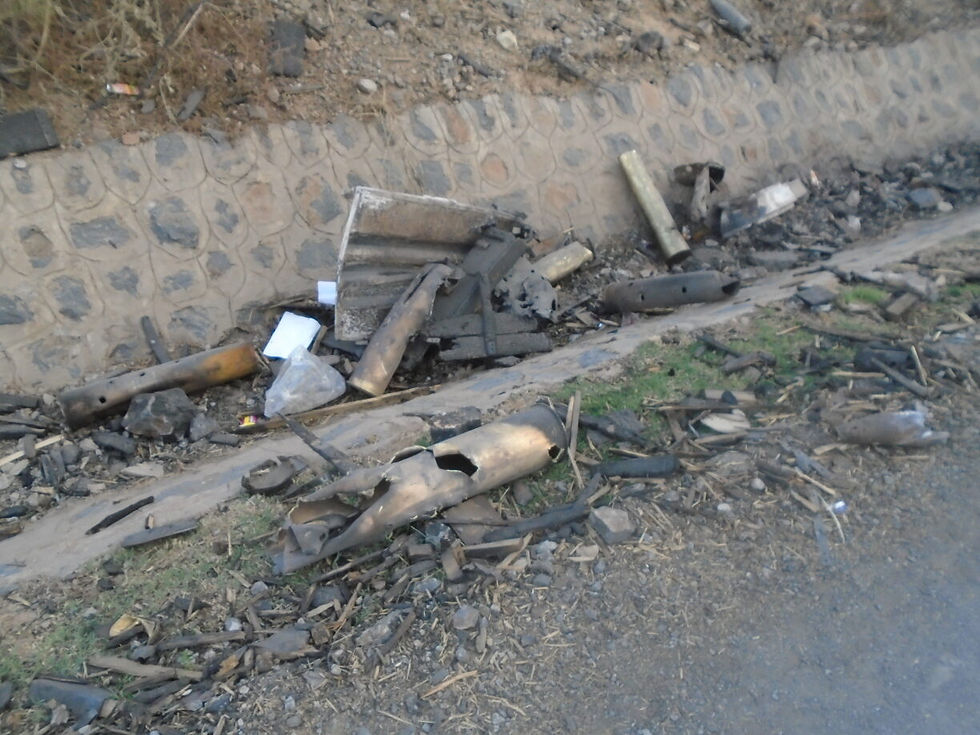
Recent non-technical survey (NTS) activities conducted by humanitarian mine action organizations are beginning to reveal the true magnitude of the problem. Communities across Tigray continue to report the presence of explosive remnants of war in agricultural fields, residential areas, grazing lands, roads, and mountainous terrain. Furthermore, prior to the conflict, large quantities of military ammunition and explosive ordnance stockpiles were stored in different parts of Tigray. During the war, many of these storage facilities were damaged or detonated, dispersing explosive items over wide areas and creating additional contamination risks for local communities.
The humanitarian consequences are severe. Explosive ordnance accidents continue to claim lives and cause life-changing injuries. As noted by the International Committee of the Red Cross (ICRC) in 2023, "unexploded weapons haunt northern Ethiopian communities." Despite ongoing risk education efforts, communities often face impossible choices. Many farmers continue cultivating potentially contaminated land because they have no alternative source of livelihood. Given the high population density and limited agricultural land available in many parts of Tigray, avoiding hazardous areas is often not a realistic option.
Economic hardship following the conflict has further increased the risks. In some communities, individuals collect explosive items as scrap metal to generate income, exposing themselves and their families to potentially fatal accidents. This dangerous coping mechanism highlights the urgent need for comprehensive mine action interventions that go beyond awareness-raising alone.
According to the United Nations Mine Action Service (UNMAS), since January 2020, at least 1,676 explosive ordnance victims have been reported in northern Ethiopia, including 189 girls, 870 boys, 156 women, and 434 men. While not all incidents have been fully verified, the figures demonstrate the devastating human impact of contamination. Given the intensity of the conflict in Tigray and the likelihood of underreporting, the actual number of casualties may be considerably higher.
The Government of Ethiopia has recognized the scale of the challenge and, through its submission to the Anti-Personnel Mine Ban Convention, has presented a two-year work plan (2026–2027) covering survey, clearance, and Explosive Ordnance Risk Education (EORE). However, the successful implementation of this plan will require substantial international support, technical capacity, and sustained funding.
A Call for Action
To reduce casualties, restore livelihoods, and support long-term recovery in Tigray, the following actions require urgent attention:
Accelerate Survey Activities in Newly Accessible Areas
Although national records indicate relatively limited contamination in Tigray, these figures largely predate the 2020–2022 conflict. Many areas affected by intense fighting, particularly in rural districts and former front-line locations, have only recently become accessible to humanitarian organizations. Expanding non-technical and technical surveys is therefore essential not only to identify hazardous areas but also to establish a realistic picture of contamination across the region. Priority should be given to agricultural communities, areas of large-scale population return, and locations where ammunition storage facilities were damaged during the conflict.
Link Clearance Operations to Agricultural Recovery
Agriculture remains the backbone of Tigray's economy, and many households depend entirely on farming for their survival. However, reports of explosive remnants in farmland continue to restrict cultivation and expose farmers to danger. Clearance activities should therefore be prioritized in productive agricultural areas and coordinated with livelihood and food-security programs. Enabling safe access to farmland would not only reduce casualties but also contribute directly to household income, local food production, and broader economic recovery.
Expand Risk Education Through Community-Based Networks
While Explosive Ordnance Risk Education (EORE) remains critical, traditional awareness campaigns alone may not reach all at-risk populations. In Tigray, local structures such as community leaders, religious institutions, schools, women's associations, youth groups, and health-extension networks can play an important role in disseminating safety messages. Particular attention should be given to children, returnees, IDP communities, and individuals engaged in scrap-metal collection, as these groups may face elevated exposure to explosive hazards.
Strengthen Victim Assistance in Underserved Areas
Many explosive ordnance survivors in Tigray face significant barriers in accessing emergency medical treatment, rehabilitation services, and psychosocial support, particularly in rural areas where health infrastructure was damaged during the conflict. Victim assistance efforts should therefore be integrated into broader recovery and health-sector rehabilitation initiatives. Expanding physical rehabilitation services, supporting community-based rehabilitation programs, and creating economic reintegration opportunities for survivors would help address both the immediate and long-term consequences of explosive ordnance accidents.
Improve Coordination Between Mine Action and Recovery Actors
The impact of contamination extends far beyond physical safety. It affects agriculture, infrastructure rehabilitation, education, water access, and the return of displaced populations. As a result, mine action planning in Tigray should be closely coordinated with government authorities, humanitarian organizations, development agencies, and local communities involved in reconstruction efforts. Clearance priorities should be informed by broader recovery objectives to ensure that limited resources generate the greatest possible humanitarian and socioeconomic impact.
Sustain International Support for Long-Term Recovery
The scale of contamination resulting from the recent conflict is likely to exceed currently available resources and national capacities. Continued support from international donors, technical partners, and humanitarian organizations will therefore be essential. Beyond funding survey and clearance operations, international assistance can help strengthen national mine action capacity, improve information management systems, and support the long-term transition from emergency response to sustainable recovery and development.
The people of Tigray have endured the devastating consequences of conflict and continue to live with the hidden dangers left behind. Addressing explosive ordnance contamination is not only a humanitarian imperative but also a prerequisite for sustainable recovery, food security, economic development, and lasting peace. Immediate and coordinated action from the Government of Ethiopia, international donors, humanitarian organizations, and development partners is essential to save lives, restore safe access to land, and help communities rebuild their future.

Amanuel Kassa is a humanitarian mine action professional and communications specialist from Ethiopia. He holds a BA in Broadcast Journalism from Addis Ababa University and an MA in Journalism and Communications from Hawassa University. He began his career as a journalist with the Ethiopian News Agency before serving as a university lecturer at Adigrat University. Transitioning to the humanitarian sector, he worked with different INGOs as a Social Worker, Explosive Ordnance Risk Education (EORE) Trainer, Community Liaison Officer, and Multi-Task Team Operator, supporting conflict-affected communities.


